
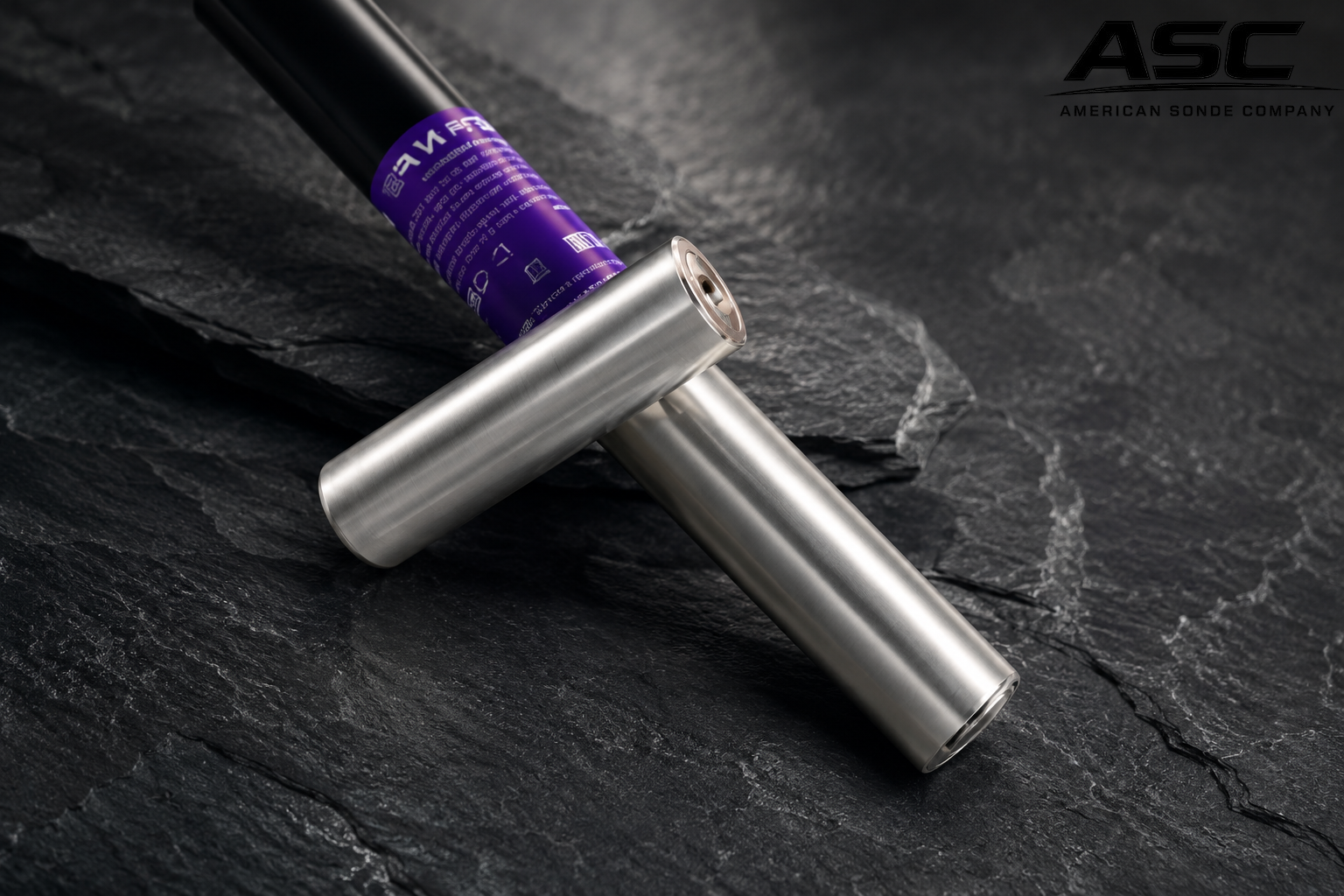
HDD sonde battery life can determine whether a crew completes a bore without interruption or loses valuable time removing the drill head, replacing batteries, and diagnosing a transmitter that appears to have failed.
There is no single runtime that applies to every horizontal directional drilling sonde. Battery life depends on the transmitter model, battery chemistry, operating mode, temperature, storage conditions, and the condition of the sonde’s battery compartment.
A transmitter may also continue consuming power when it is not actively being used. Batteries installed several days before a job may therefore have less remaining capacity than expected.
Understanding the factors that affect HDD sonde battery life can help contractors reduce unnecessary downtime and avoid preventable transmitter problems.
What Affects HDD Sonde Battery Life?
The expected runtime of a sonde depends primarily on its battery configuration and power requirements.
Some HDD transmitters use standard alkaline batteries, while others support lithium batteries, dedicated transmitter batteries, or rechargeable battery packs. Higher-output transmitters may use more power, especially when operating in modes designed for greater depth or difficult locating conditions.
Actual battery performance can also be affected by:
- Battery age and quality
- Jobsite temperature
- Signal power settings
- Operating frequency
- Condition of the battery contacts
- Time spent inside the sonde before use
- Internal transmitter wear
- Storage conditions
Published runtime figures should be treated as estimates rather than guarantees. A crew should not begin a difficult or high-risk bore based only on the assumption that the batteries probably have enough power remaining.
Use Fresh, Matching Batteries
When a sonde requires two batteries, both should be replaced at the same time.
Combining a fresh battery with a partially discharged battery can create inconsistent performance. The weaker battery may limit the complete circuit, causing the sonde to shut down sooner than expected.
Crews should also avoid mixing:
- Different battery brands
- Different battery chemistries
- Batteries from different packages
- New and previously used batteries
- Batteries with different production dates
Using a matching set provides more predictable performance and reduces the risk of an unexpected power loss underground.
The cost of replacing both batteries is minimal compared with the labor, equipment downtime, and potential bore disruption caused by transmitter failure.
Inspect the Battery Compartment
Poor electrical contact can look like a battery problem or a failing sonde.
Before installing batteries, inspect the compartment, battery cap, spring, threads, and electrical contact surfaces. Look for corrosion, dirt, moisture, drilling-fluid residue, damaged threads, compressed springs, or worn contacts.
A sonde may function normally during a stationary test but lose power when the drill head begins rotating or vibrating. Movement can interrupt a weak electrical connection and cause the locator to lose signal, pitch, roll, or temperature information.
A transmitter that repeatedly turns off when moved should not be placed underground until it has been inspected.
Follow the manufacturer’s maintenance instructions when cleaning the battery compartment. Aggressive scraping, unapproved chemicals, or excessive force may cause additional damage.
Remove Batteries During Extended Storage
Leaving batteries inside an HDD sonde during long periods of storage creates unnecessary risk.
Batteries may gradually discharge, leak, corrode, or damage the transmitter’s internal contacts. Depending on the sonde model, the transmitter may also continue using a small amount of power while it is inactive.
Remove the batteries when the sonde will not be used for an extended period. Store the transmitter in a dry and protected location away from direct sunlight, extreme heat, freezing temperatures, and moisture.
Replacement batteries should also be stored correctly. Do not leave loose batteries in a toolbox where their terminals may contact metal tools, damaged batteries, or other conductive materials.
Before returning a stored sonde to service, inspect the battery compartment, install fresh batteries, and complete an above-ground function test.
Understand Transmitter Power Settings
Some modern HDD sondes offer multiple power modes.
A higher-power mode may improve signal performance or extend the usable locating depth. However, stronger output generally requires more energy and may reduce the transmitter’s available runtime.
Maximum power is not always necessary for shallow or moderate-depth bores. When the locating system allows it, crews can select a power mode appropriate for the expected depth, interference level, and ground conditions.
The objective should not be to maximize battery life at the expense of reliable locating. The objective is to use enough transmitter power to maintain accurate and stable communication without consuming more energy than the job requires.
Deep bores, areas with significant interference, and jobs with limited receiver access may still require higher-power operation.
Temperature and HDD Sonde Battery Life
Extreme temperatures can affect both the batteries and the transmitter.
Excessive heat inside the drill head may shorten battery runtime and damage the sonde’s electronic components. High transmitter temperatures can result from inadequate drilling fluid, blocked fluid ports, excessive rotation, worn tooling, difficult ground conditions, or prolonged operation without forward progress.
Crews should monitor transmitter temperature throughout the bore rather than waiting for a complete signal loss.
Cold conditions can also temporarily reduce battery output. Batteries stored overnight in a freezing vehicle may perform differently from batteries kept within their recommended storage range.
Keep replacement batteries dry and protected until they are ready to be installed. Never attempt to heat batteries using an open flame, direct heater, or another uncontrolled heat source.
Test the Sonde Before Starting the Bore
An above-ground test is one of the most effective ways to prevent battery-related downtime.
Install the batteries that will be used during the bore and test the transmitter with the correct locator. Confirm that the receiver displays stable:
- Signal strength
- Pitch information
- Roll information
- Temperature data
- Battery status
- Depth information at a known distance
Allow the transmitter to operate for several minutes. Rotate and gently move the sonde to check for intermittent battery contact.
The sonde should also be tested inside the intended housing. A transmitter that performs correctly outside the drill head but becomes unreliable after installation may have a housing, positioning, antenna-slot, or connection problem rather than a battery problem.
Do Not Rely Only on the Battery Indicator
A locator’s battery indicator is useful, but it should not replace proper battery management.
Displayed battery status may not always provide a precise prediction of remaining runtime. Battery voltage can decline differently depending on battery chemistry, temperature, load, and transmitter condition.
A battery may appear usable during an above-ground check but drop rapidly under continuous operation. For important bores, fresh batteries are usually more dependable than attempting to use the final remaining capacity of an older set.
Crews should track when batteries were installed and approximately how long the sonde has operated. A simple written or digital equipment log can prevent uncertainty between jobs.
Carry Replacement Batteries on Every Job
Every locating kit should include compatible replacement batteries.
Before leaving for a jobsite, confirm that the replacement batteries are:
- The correct size and chemistry
- Within their usable shelf life
- Stored in a protected container
- Free from corrosion or physical damage
- Compatible with the transmitter model
Crews should also carry any tools required to access the battery compartment safely.
Keeping batteries available in the truck does not eliminate underground failure, but it prevents a minor issue from turning into a lengthy delay caused by searching for compatible replacements.
When the Problem Is Not the Battery
Installing fresh batteries will not correct every sonde problem.
The transmitter may require inspection if it continues to show:
- Intermittent signal
- Missing pitch or roll
- Abnormal temperature readings
- Rapid battery depletion
- Failure to power on
- Unstable communication
- Reduced operating range
Possible causes include damaged contacts, internal electronic failure, moisture intrusion, overheating, impact damage, or general component wear.
Testing the sonde with a known-good battery set and compatible locator can help separate a battery issue from a transmitter or receiver problem.
Protecting HDD Sonde Battery Life
Reliable sonde performance depends on more than simply installing batteries and beginning the bore.
Crews can reduce battery-related interruptions by using fresh matching batteries, inspecting electrical contacts, selecting appropriate transmitter settings, monitoring temperature, removing batteries during storage, and completing an above-ground test before every important job.
These procedures take only a few minutes, but they can prevent hours of downtime.
When a sonde continues to lose power or produce unstable readings after the batteries have been replaced, the transmitter should be inspected before it is used underground again. Repeatedly installing new batteries into a damaged sonde will not correct the underlying problem and may place the bore at unnecessary risk.