
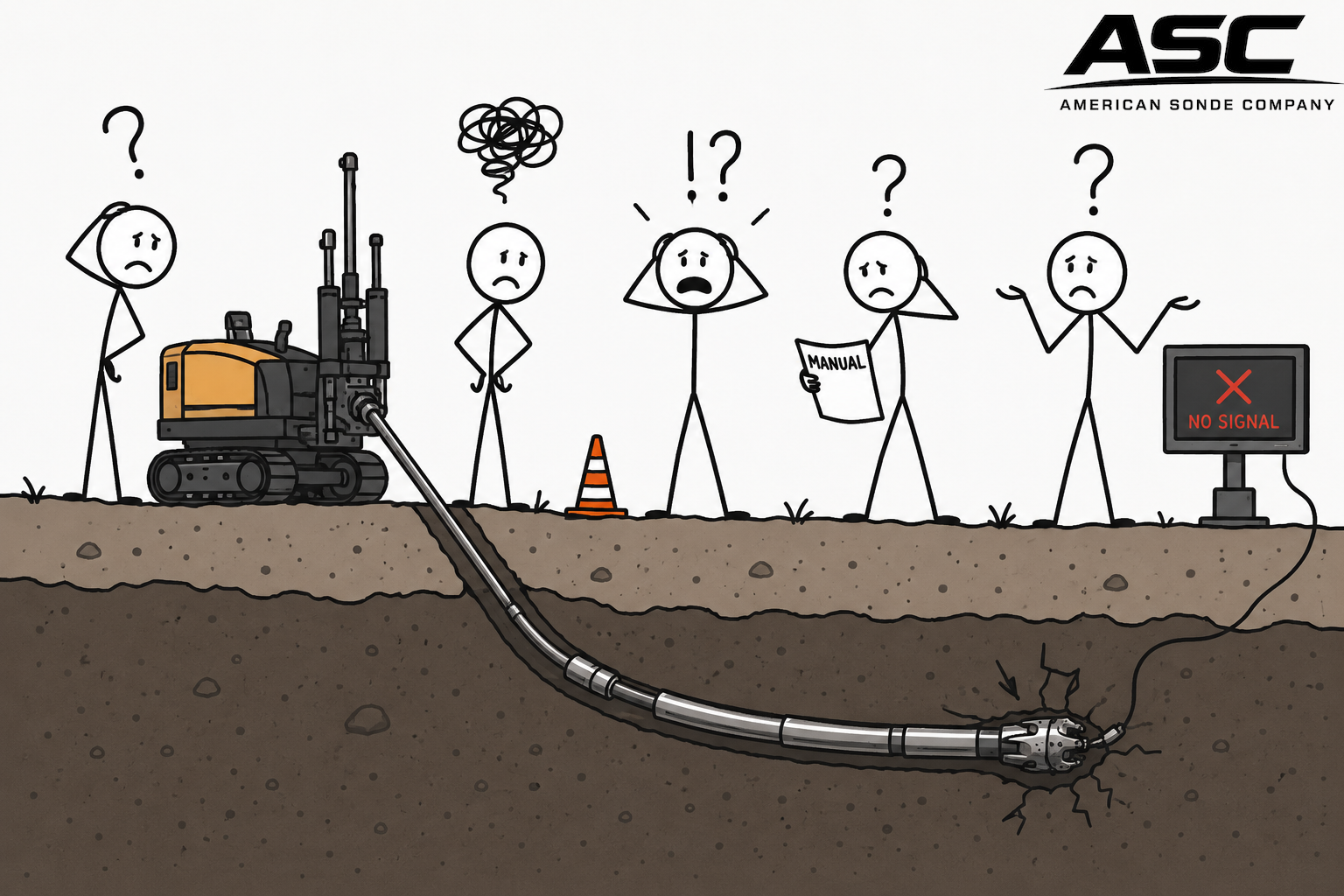
HDD Sonde Troubleshooting: Why It Matters
HDD Sonde Troubleshooting is one of the most important skills in horizontal directional drilling operations. A failed sonde can stop an entire bore, delay utility installation, increase labor costs, and create unnecessary excavation risks. Whether you run a Vermeer, Ditch Witch, or other HDD rig, maintaining accurate sonde tracking is essential for productivity and safety.
Many HDD contractors only focus on drill maintenance while ignoring the electronics guiding the bore path. In reality, a malfunctioning sonde or locator system can be just as damaging as a hydraulic failure.
This guide covers the most common HDD sonde problems, how to diagnose them quickly, and what contractors can do to minimize downtime on the jobsite.
What Is an HDD Sonde?
An HDD sonde is an electronic transmitter located behind the drill head. It sends positioning and orientation data to a locator above ground during horizontal directional drilling operations.
A typical HDD sonde provides:
- Pitch
- Roll
- Depth
- Temperature
- Battery status
- Signal frequency
The locator receives this information so the drill operator can steer accurately underground.
Without a properly functioning sonde, operators may lose visibility of the bore path entirely.
Common HDD Sonde Troubleshooting Problems
1. Signal Loss During Drilling
Signal loss is one of the most common HDD sonde troubleshooting situations contractors encounter.
Possible causes include:
- Dead or weak batteries
- Excessive drilling depth
- Interference from power lines
- Water intrusion inside the sonde housing
- Incorrect frequency selection
- Damaged transmitter components
How to Fix Signal Loss
Start with the simplest solution first:
- Replace batteries with fresh, high-quality cells.
- Inspect battery terminals for corrosion.
- Verify the correct frequency is selected.
- Move away from overhead power interference.
- Test the sonde above ground before drilling.
- Inspect O-rings and housing seals for water damage.
If signal strength remains weak above ground, the sonde itself may require repair or replacement.
HDD Sonde Troubleshooting for Interference Issues
Electrical interference is a major issue in urban HDD projects.
Common Sources of Interference
- Buried power lines
- Traffic signal systems
- Fiber optic infrastructure
- Electric substations
- Cellular towers
- Reinforced concrete
Interference can create false readings, inconsistent depth calculations, or complete signal distortion.
Best Practices to Reduce Interference
Perform a Background Scan
Always scan the site before drilling begins. Most modern locators allow operators to identify active interference frequencies.
Use Alternate Frequencies
Many modern HDD sondes support multiple frequencies. Switching frequencies often improves signal clarity in difficult environments.
Maintain Line of Sight
Keep the locator positioned directly above the sonde path whenever possible.
Dead Batteries and Power Issues
Battery problems account for a surprisingly high percentage of HDD sonde troubleshooting calls.
Signs of Battery Failure
- Intermittent signal
- Sudden shutdowns
- Inaccurate depth readings
- Weak signal strength
- Locator disconnects
Battery Maintenance Tips
- Store batteries in dry conditions
- Avoid mixing old and new batteries
- Remove batteries during long-term storage
- Use premium lithium batteries when possible
- Carry backup battery sets to every jobsite
Cold weather can also significantly reduce battery performance.
Water Damage Inside the Sonde
Horizontal directional drilling environments are harsh. Mud, slurry, vibration, and water exposure constantly threaten electronics.
Even minor moisture intrusion can damage internal sonde circuitry.
Warning Signs of Water Intrusion
- Fogging inside the housing
- Corroded battery contacts
- Erratic readings
- Overheating
- Total transmitter failure
Preventing Water Damage
Inspect O-Rings Frequently
Worn or cracked O-rings are one of the most common failure points.
Clean Threads Before Closing
Dirt or drilling fluid trapped in threads can compromise the seal.
Avoid Over-Tightening
Excessive force may damage sealing surfaces.
HDD Sonde Troubleshooting for Inaccurate Depth Readings
Incorrect depth readings can lead to utility strikes, failed inspections, and dangerous bores.
Potential Causes
- Improper locator calibration
- Magnetic interference
- Incorrect sonde setup
- Operator positioning errors
- Excessive drill head pitch
How to Improve Accuracy
Calibrate Equipment Daily
Most manufacturers recommend calibration before every major drilling operation.
Verify Depth Manually
When conditions become questionable, potholing and manual verification may be necessary.
Train Operators Properly
Even advanced HDD locating systems depend heavily on operator skill.
When Should You Replace an HDD Sonde?
Not every sonde problem justifies repair.
Consider Replacement If:
- The housing is cracked
- Water damage is severe
- Repair costs exceed replacement value
- Signal performance remains inconsistent
- Internal electronics repeatedly fail
Reliable locating equipment is essential for profitable HDD operations.
Choosing Quality HDD Sonde Equipment
Not all sondes perform equally under difficult drilling conditions.
Contractors should evaluate:
- Frequency options
- Maximum depth capability
- Water resistance ratings
- Battery life
- Compatibility with existing locators
- Serviceability
- Manufacturer support
Higher-quality sondes often reduce downtime and improve drilling accuracy over time.
Final Thoughts on HDD Sonde Troubleshooting
HDD Sonde Troubleshooting should be treated as a core operational skill, not an afterthought. Fast diagnosis of signal problems, battery failures, interference, and water damage can save contractors thousands of dollars in downtime and prevent major drilling mistakes.
Routine maintenance, proper storage, daily calibration, and high-quality equipment all contribute to more reliable HDD locating performance.
For HDD contractors, utility crews, and drilling companies, investing time into proper HDD sonde troubleshooting procedures can significantly improve jobsite efficiency and drilling accuracy.