
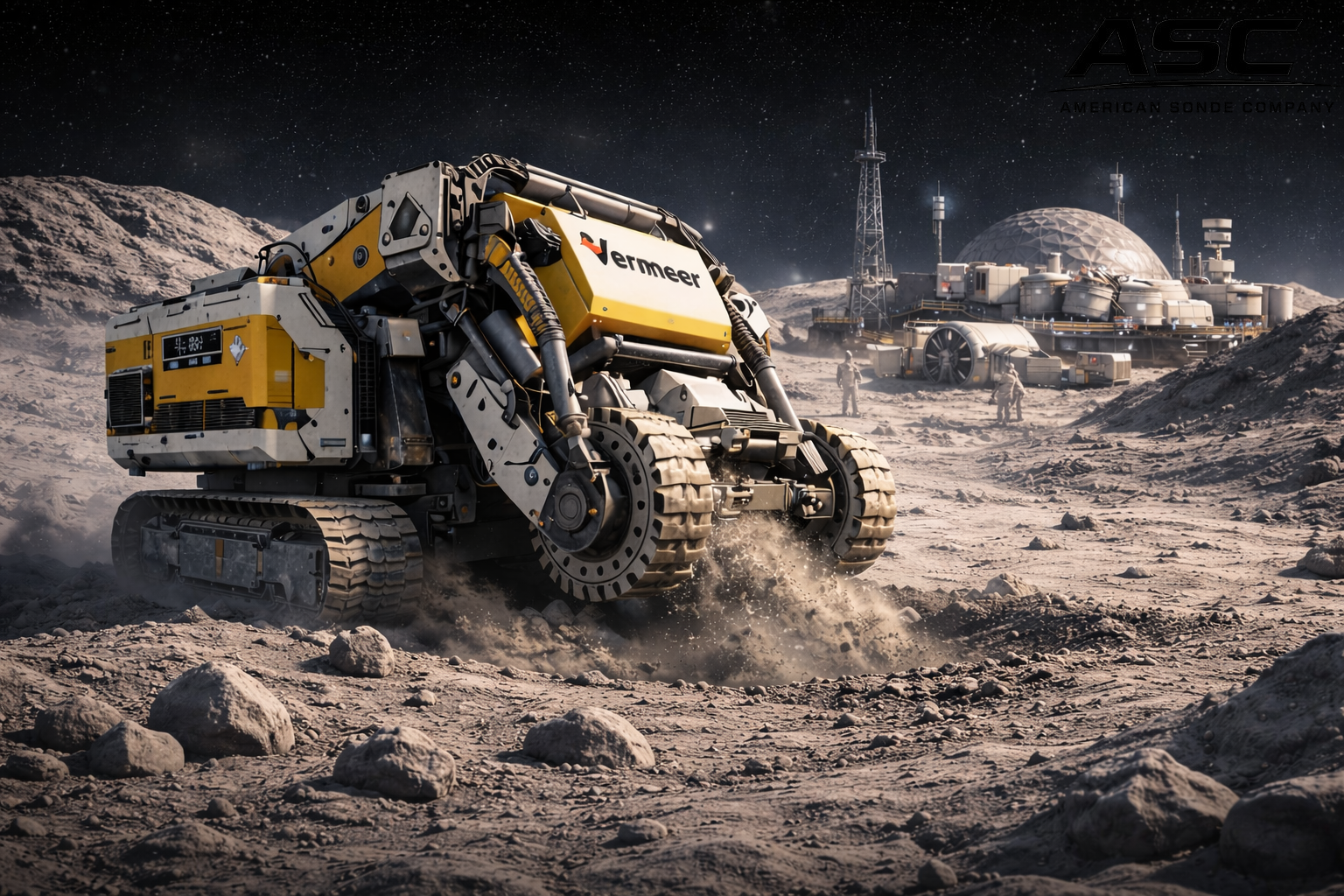
Lunar Iron is no longer a concept, it’s becoming real engineering.
At the ASCE Earth & Space 2026, Astroport Space Technologies and Vermeer Corporation announced a collaboration that could define how humanity builds its first permanent infrastructure on the Moon.
This isn’t theory. This is heavy equipment, automation, and construction, adapted for one of the harshest environments imaginable.
What Is Lunar Iron?
Lunar Iron refers to the next generation of autonomous construction machinery designed specifically for the Moon.
The goal is simple but brutal:
- Build roads
- Prepare landing pads
- Dig foundations
- Support power systems and habitats
All without human operators physically present.
How Astroport and Vermeer Are Making It Happen
The partnership combines two different strengths:
- Astroport: robotic autonomy + lunar material (regolith) engineering
- Vermeer: decades of experience in surface mining and heavy equipment
Together, they are adapting Earth-based machinery for lunar conditions through a system called UTIPA (Universal Tool Implement Payload Adapter).
What UTIPA Actually Does:
- Converts machines into modular systems
- Allows interchangeable tools
- Enables adaptation to extreme environments
This is critical because traditional machines rely on weight and gravity, two things you don’t get on the Moon.
1. Lunar Iron Solves the “No Gravity” Problem
On Earth, heavy equipment works because of mass and downward force.
On the Moon:
- Gravity is ~1/6 of Earth’s
- Machines lose traction and stability
Lunar Iron systems adjust for this by:
- Redesigning force application
- Using high-torque cutting instead of weight
- Rethinking how machines interact with the ground
That’s not an upgrade, that’s a complete redesign.
2. Extreme Conditions Demand Extreme Engineering
The Moon isn’t just “cold” it’s violently unstable:
- Massive temperature swings
- Abrasive dust (regolith)
- No atmosphere for protection
To survive, Lunar Iron machinery must be:
- Fully sealed
- Highly durable
- Resistant to constant wear
This level of engineering pushes equipment beyond anything used in normal construction.
3. Autonomous Construction Is the Only Option
There’s no workforce standing on the Moon operating equipment day-to-day.
So everything must be:
- Autonomous
- Self-correcting
- Remotely supervised at best
This is where Astroport’s robotics come in.
Why this matters:
The same autonomy being built for the Moon will eventually reshape how construction works on Earth.
4. Lunar Infrastructure Is Closer Than People Think
According to the partnership, this work aligns directly with NASA’s goal of building a Moon base by 2030.
That includes:
- Landing pads
- Roads
- Power infrastructure
- Safe zones for critical systems like nuclear energy
This isn’t decades away, it’s being actively engineered right now.
5. This Is the Beginning of a Space Industrial Economy
Here’s the bigger picture most people miss:
Lunar Iron isn’t just about construction, it’s about building an entire industrial base off Earth.
Astroport’s long-term vision includes:
- Using lunar materials instead of transporting from Earth
- Creating sustainable infrastructure
- Supporting future missions to Mars and beyond
This is the foundation of what’s often called the cislunar economy, economic activity between Earth and the Moon.
Why This Matters More Than It Sounds
It’s easy to dismiss this as “just space news.”
That’s a mistake.
Historically, technologies built for extreme environments:
- Start specialized
- Become refined
- Eventually dominate mainstream industries
Think GPS, robotics, advanced materials.
Lunar Iron is following the same path.
Final Takeaway
Lunar Iron represents a shift from exploration to construction.
The collaboration between Astroport Space Technologies and Vermeer Corporation shows one thing clearly:
Humanity isn’t just planning to visit the Moon anymore, we’re preparing to build on it.
And the companies solving those problems today will define what that future looks like.