
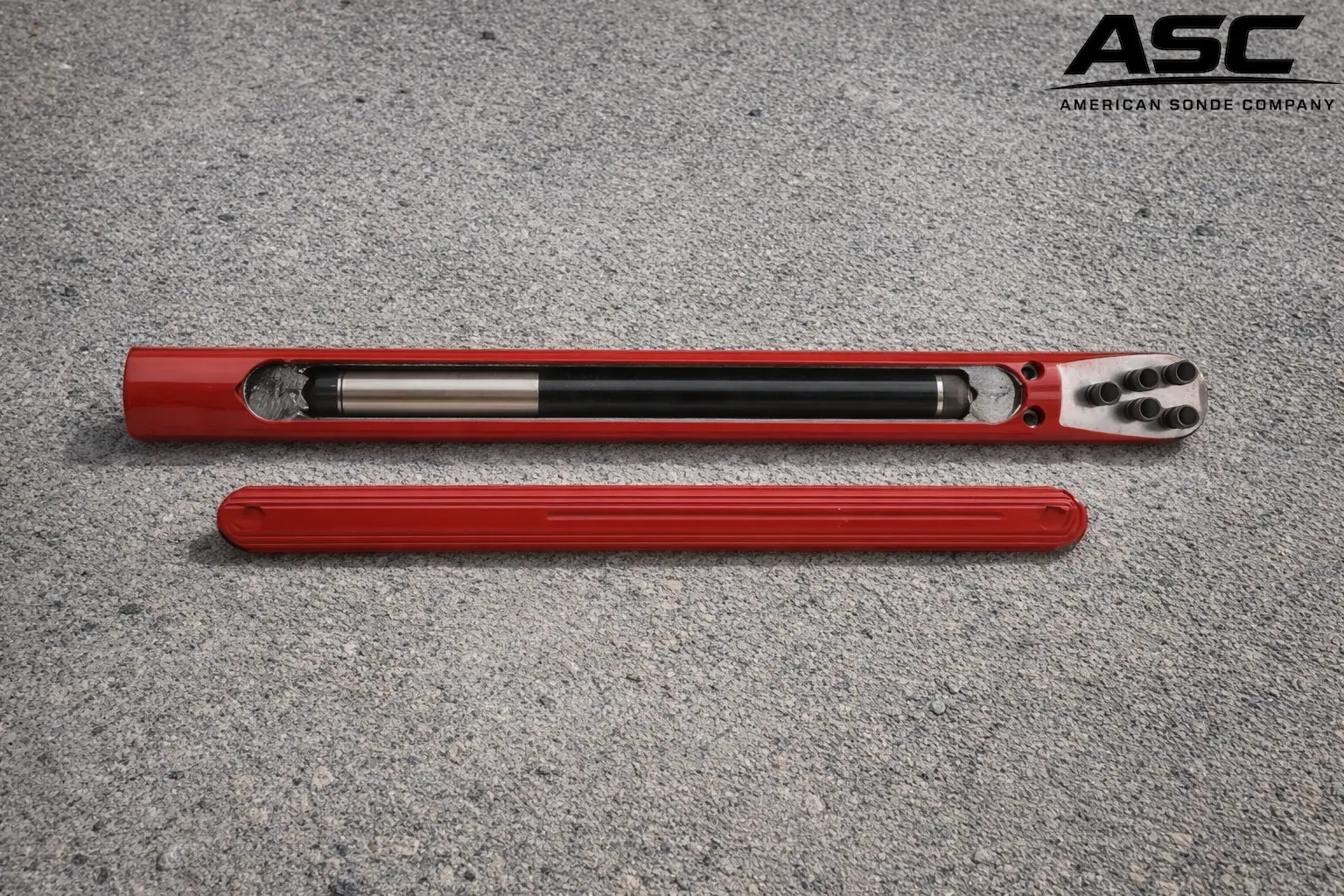
Proper transmitter placement inside the drill head plays a critical role in signal stability, accuracy, and overall equipment longevity during horizontal directional drilling (HDD). Even high-quality transmitters can underperform or fail prematurely when placement is overlooked or done incorrectly.
Signal Stability Starts With Transmitter Placement
A transmitter must sit securely and consistently within the drill head to transmit an accurate signal. Poor seating or excessive movement can cause fluctuating readings, inconsistent pitch data, or intermittent signal loss. These issues often appear as locating problems but are actually caused by mechanical instability inside the head.
Orientation Affects Accuracy
Incorrect orientation can lead to inaccurate pitch and roll readings. When a transmitter shifts or rotates during drilling, the locator may display misleading data, making steering adjustments harder and increasing the risk of bore deviation. Consistent orientation helps ensure predictable readings throughout the pilot bore.
Heat Transfer and Overheating Risks
Transmitters are exposed to significant heat generated by drilling friction. Improper placement can restrict airflow or increase direct contact with high-heat areas of the drill head. Over time, excessive heat exposure can damage internal components and shorten transmitter lifespan.
Vibration and Mechanical Stress
Drilling generates constant vibration. If a transmitter is not properly secured, repeated vibration can cause internal stress, seal degradation, or housing damage. Even minor movement over time can lead to electrical or structural failure.
Protection Against Fluid Intrusion
Correct transmitter placement also helps maintain proper sealing. Poor fitment or damaged housings increase the risk of drilling fluid or moisture entering the transmitter, which can cause immediate failure or long-term corrosion.
Final Thoughts
Transmitter placement is more than a setup detail, it directly affects performance, accuracy, and durability. Taking the time to ensure proper seating, orientation, and protection inside the drill head reduces signal issues, minimizes downtime, and helps extend the life of the equipment.